Your Photos Deserve More Than One Moment in the Spotlight

Meet Pic-Time’s New Content Studio
As a photographer, you’ve probably spent countless hours building a portfolio you’re proud of. You’ve invested in your craft, photographed incredible people and places, delivered beautiful galleries to your clients, and created thousands of images that represent your talent.
But here’s a question worth asking: How much of that incredible work is actually helping you market your photography business?
For many photographers, the answer is probably not nearly enough.
Think about it. You photograph a wedding, spend hours editing hundreds of images, deliver a beautiful client gallery, share a few favorites on Instagram, and then move on to the next project. Meanwhile, hundreds of photographs that could be attracting future clients are sitting inside your gallery delivery platform.
And the next time you sit down to create content for your photography business, you’re somehow starting from scratch again.
The reality is that most photographers don’t have a content problem. They have a content workflow problem.
You’re already creating incredible visual content every time you pick up your camera. The challenge is finding an efficient way to organize, repurpose, and share that work across your marketing channels.
That’s where having the right photography gallery delivery software can make a significant difference.
With the launch of Pic-Time’s Content Studio, photographers now have a way to connect their client galleries with their marketing efforts, making it easier to turn existing photographs into Instagram Reels, blog posts, slideshows, and other content that helps grow their businesses.
But before we dive into the features, let’s talk about something even more important: how to build a content creation strategy that actually works for your photography business.
Why Content Creation Matters for Photographers
Photography is a visual business, which means your work is often your most powerful marketing asset.
Potential clients want to see what you create, understand your style, and imagine what it would feel like to work with you. Whether they’re discovering your business through Instagram, Google, Pinterest, or a recommendation from a friend, the content you share plays a significant role in building that connection.
But effective photography marketing isn’t just about posting beautiful photographs.
It’s about creating content that does three things:
- Attracts the right audience. Your content should help potential clients discover your photography business, whether through social media, search engines, or referrals.
- Builds trust and authority. Sharing your expertise, process, and client experiences helps people understand why they should hire you.
- Encourages inquiries and bookings. Your content should guide potential clients toward taking the next step, whether that’s visiting your website, reading a blog post, or submitting an inquiry.
And here’s something worth remembering: you don’t need to create entirely new content for every platform. One photography session can provide enough material for multiple pieces of valuable marketing content.
For example, a single wedding gallery could become an Instagram Reel featuring emotional ceremony moments, a blog post showcasing the venue, a Pinterest collection highlighting floral inspiration, and a vendor spotlight that helps build relationships with other wedding professionals.
That’s four different marketing opportunities from work you’ve already completed. The key is learning how to make your photographs work harder for your business.
Your Photography Gallery Delivery Platform Should Do More Than Deliver Photos
Traditionally, photography gallery delivery software has served one primary purpose: giving clients a beautiful, convenient way to view and download their photographs.
And while professional gallery delivery remains an essential part of the client experience, photographers should be asking more of the platforms they invest in.
Think about everything that happens after you photograph a session. You edit the images, upload them to your client gallery, deliver the photographs, and then often download many of those same images again to create marketing content in other applications. You might upload photographs into Canva to create a social media post, download another collection to create an Instagram Reel, and manually organize images for a blog post.
It’s a lot of unnecessary movement between platforms. What if your gallery delivery software could also help you organize your portfolio, find images across previous sessions, create marketing content, and generate additional revenue?
That’s the bigger opportunity behind Pic-Time.
The platform combines professional client gallery delivery with tools for print sales, albums, automated marketing, and now content creation. Instead of treating gallery delivery as the final step in your photography workflow, you can begin thinking about it as the foundation for everything that happens next.
Introducing Pic-Time Content Studio: A Smarter Way to Create Content
Pic-Time’s Content Studio was designed to help photographers turn the images they’ve already created into fresh marketing content. It brings together several tools that simplify the process of finding, organizing, and repurposing photographs.
These include Cross Gallery Search, image collections, Instagram Reel creation, slideshows, and blogging tools. The benefit isn’t simply having another content creation application. It’s having content creation tools connected to the photographs that already live inside your professional photography galleries.
Let’s look at how photographers can use these tools to build a more effective marketing workflow.
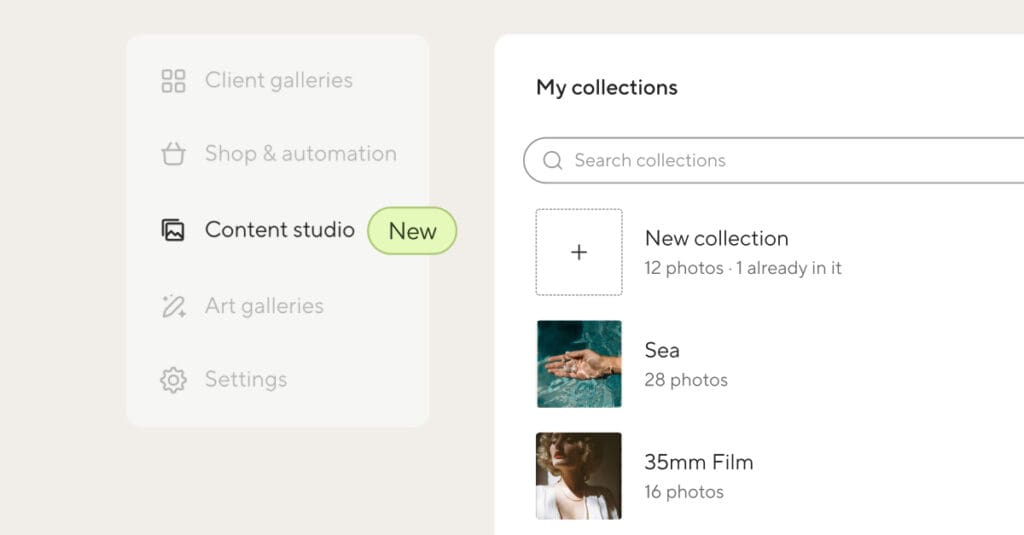
1. Find the Right Images Faster With Cross Gallery Search
One of the biggest challenges in content creation for photographers is finding the images you want to use.
If you’ve photographed hundreds of sessions or weddings over the years, you probably have thousands of images spread across dozens or even hundreds of galleries. And while those photographs are organized for your clients, finding specific images for marketing can be another story. Maybe you want to create a Reel featuring your favorite black-and-white wedding photographs.
Or perhaps you’re writing a blog post about a particular venue and want to find every wedding you’ve photographed there. Previously, that might have meant opening individual galleries, scrolling through images, and manually downloading your favorites.
With Pic-Time’s Cross Gallery Search, you can search across your entire account using descriptions, client names, vendors, and locations. You can also refine your results with filters, including date, color, and image orientation.
Practical example: Creating a wedding venue marketing campaign
Imagine you’re a wedding photographer who wants to book more weddings at a particular venue.
Instead of searching through years of client galleries, you can look for photographs associated with that location and gather your strongest images. From there, you could create a blog post about photographing weddings at the venue, an Instagram Reel showcasing your favorite moments, and a collection of images to share with the venue’s marketing team.
One search could help you create multiple pieces of content designed to attract a very specific type of client. And that’s where content creation becomes more strategic. You’re no longer just posting photographs because you need something to share. You’re intentionally creating content that supports your business goals.
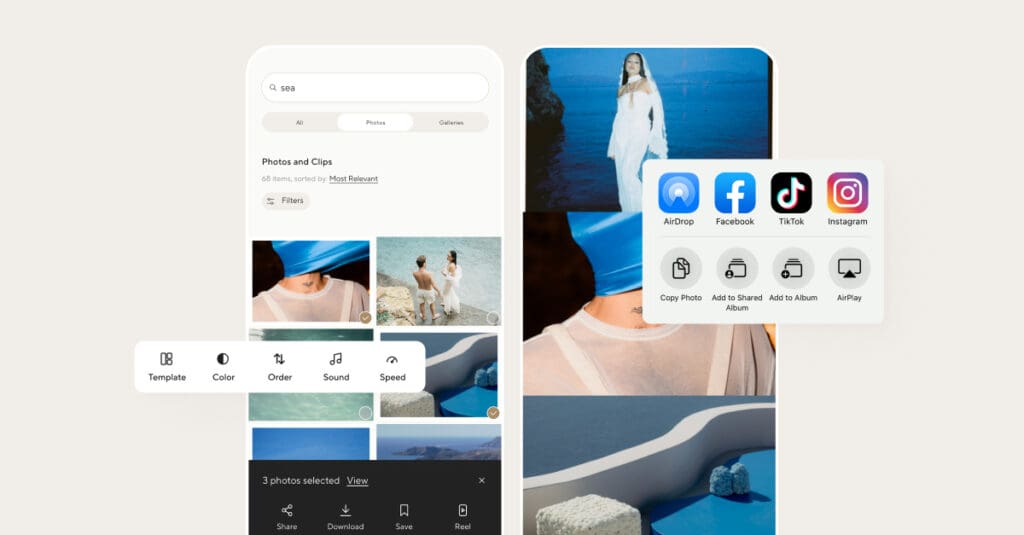
2. Create Instagram Reels for Your Photography Business
Instagram Reels can be a useful way to showcase your photography, share client stories, and introduce your work to new audiences.
But let’s be realistic. Creating Reels can become time-consuming, especially when you’re trying to manage a photography business at the same time. Finding images, selecting music, adjusting transitions, organizing photographs, and exporting the final video can turn a seemingly simple post into another lengthy task.
Pic-Time’s Reel Creator helps streamline that process. You can select photographs directly from your galleries, choose from professionally designed templates, customize colors to reflect your brand, and arrange images using a drag-and-drop editor.
The tool also includes music options and the ability to sync image transitions with the beat. If you prefer using trending Instagram audio, you can adjust the pacing of your Reel and add the audio when publishing.
Five Instagram Reel Ideas for Photographers
If you’re wondering what to create, here are five ideas you can try using photographs you already have.
1. The complete client experience. Create a Reel that walks potential clients through an entire session or wedding day, from the first moments to the final photographs. This helps demonstrate your storytelling approach and gives potential clients a better understanding of what working with you looks like.
2. Your favorite images from a specific venue. If you want to attract more bookings at a particular wedding venue, create a Reel featuring photographs you’ve captured there. Tag the venue and consider sharing the content with its team.
3. The moments your clients didn’t even notice. Create a Reel featuring the candid, emotional, and unexpected moments you captured throughout a wedding or session. From quiet interactions to genuine laughter, these photographs showcase your ability to tell a story and help potential clients understand the value of having a photographer who notices the little things.
4. Seasonal photography inspiration. Family photographers can create Reels featuring fall sessions, holiday portraits, or spring family photography. Wedding photographers can highlight seasonal wedding details and inspiration.
5. A year in photographs. Gather your favorite images from the past year and create a visual recap that celebrates your clients, creativity, and growth.
The goal isn’t necessarily to create more content. It’s to create content more efficiently, so you can show up consistently without sacrificing the time you need for your clients and your life outside of work.
3. Use Photography Blogging to Improve Your Website SEO
Let’s talk about one of the most overlooked opportunities in photography marketing: blogging.
While social media is an important part of building visibility, your website plays a different role in attracting and converting potential clients. A well-optimized photography blog can help your website appear in search results when potential clients are actively looking for photographers, venues, locations, and advice.
For example, imagine a couple searching Google for:
- Best wedding venues in Nashville
- Wedding photography at a specific venue
- What to wear for family photos in Winnipeg
- How to plan a destination wedding in Italy
- Newborn photography session tips
These are searches from people who may be actively planning the types of experiences you photograph. Creating helpful, relevant blog posts gives your photography business more opportunities to appear in those searches.
How to Write SEO-Friendly Photography Blog Posts
The best photography blog posts aren’t simply galleries filled with photographs. They combine beautiful imagery with useful information that answers questions potential clients are searching for.
For example, instead of publishing a post titled “Sarah and James’ Wedding,” consider something more descriptive, such as “A Romantic Summer Wedding at [Venue Name] in Nashville.” That title gives search engines and potential clients more context about the content.
You can also strengthen your photography blog SEO by including:
- Descriptive headings that naturally incorporate relevant search terms.
- Helpful information about venues, locations, planning, or the client experience.
- Image alt text that accurately describes the photographs.
- Internal links to relevant services, galleries, and other blog posts.
- Clear calls to action that encourage visitors to inquire about your photography services.
It’s also important to remember that good SEO takes time. Publishing a blog post doesn’t guarantee search rankings, but consistently creating useful content can help strengthen your website’s visibility.
How Pic-Time Makes Photography Blogging Easier
Pic-Time’s Blog Builder helps photographers turn gallery images into beautifully designed blog posts. You can select images from existing galleries or saved collections, customize the layout, adjust fonts and colors, and use the AI Writing Assistant to help develop written content.
You can also add SEO information and integrate the finished post with your website. For photographers who struggle to maintain a consistent blogging schedule, having the images and creation tools connected can remove a significant amount of friction from the process.
Instead of spending your entire afternoon preparing photographs for a blog post, you can spend more of that time writing content that provides value to your audience. That’s what ultimately matters.
4. Organize Your Portfolio Into Reusable Content Collections
One of the most effective ways to simplify content creation is to stop organizing your photographs exclusively by client.
Your client galleries should absolutely remain organized by session or event. But for marketing purposes, it can be incredibly valuable to organize photographs by theme, location, or business goal. Pic-Time’s Content Studio allows you to create image collections using photographs from multiple galleries.
These collections can then be reused when creating Reels, slideshows, and other marketing content.
Content Collection Ideas for Photographers
A wedding photographer might create collections for luxury wedding venues, emotional ceremony moments, reception inspiration, bridal portraits, destination weddings, and favorite vendor collaborations.
A family photographer could create collections for seasonal family sessions, newborn photography, maternity portraits, outdoor locations, and wardrobe inspiration.
A commercial photographer might organize images by industry, brand campaign, product category, or creative style.
The important thing is to organize your work around the topics your ideal clients care about.
For example, if your goal is to book more luxury destination weddings, having a collection of your strongest destination wedding photographs makes it easier to create consistent marketing content around that specialty.
You could use that collection for Instagram Reels, blog posts, website updates, or presentations for potential clients. And as you photograph more sessions, you can continue adding images to your collections. Over time, you’re building an organized content library that becomes increasingly valuable to your business.
5. Build a Photography Content Creation Workflow You Can Actually Maintain
One of the biggest mistakes photographers make with marketing is relying entirely on inspiration. You sit down to create content when you have time, search for photographs, try to come up with something interesting to say, and hope it reaches the right people. But a more effective approach is to build a repeatable workflow.
Here’s a simple content creation system photographers can use each month.
Step 1: Choose One Marketing Goal
Before creating content, decide what you want it to accomplish.
Maybe you want to attract more wedding inquiries, increase bookings for family sessions, become better known at a particular venue, or educate clients about the value of printed photographs.
Having a clear goal helps you create content with intention.
Step 2: Select a Relevant Collection of Images
Use Cross Gallery Search or your existing image collections to find photographs that support that goal.
For example, if you’re trying to book more destination weddings, select images that demonstrate your experience photographing weddings in the locations you want to work in.
Step 3: Create One Educational Blog Post
Write a helpful blog post that answers a question your ideal client might search for.
If you’re a destination wedding photographer, this might be a guide to planning a wedding in a specific location.
If you’re a family photographer, it could be a guide to choosing outfits for family photographs.
Use images from your galleries to support the content.
Step 4: Turn Those Images Into an Instagram Reel
Create a Reel using photographs from the same collection.
You can use the Reel to highlight the topic of your blog post and encourage viewers to visit your website for more information.
Step 5: Share the Content Across Multiple Channels
The same images and ideas can also support a newsletter, Pinterest content, or an Instagram carousel. Rather than creating something completely different for every platform, adapt the content to suit each audience.
Step 6: Review What’s Working
At the end of the month, take a look at which pieces of content generated website visits, inquiries, engagement, or meaningful conversations. Pay attention to the topics and types of images that resonate with your ideal clients.Then use that information to guide your next month of content creation.
The goal is to create a sustainable marketing system, not another full-time job.
6. Turn Your Client Galleries Into Opportunities for Additional Revenue
Content creation is only one part of the bigger picture. One of the reasons your gallery delivery platform matters so much is that it influences what happens after you deliver your photographs.
For many photographers, delivery is treated as the end of the client relationship. You send the gallery, the client downloads the images, and the project is complete.
But your galleries can also create opportunities for additional revenue and stronger long-term client relationships. Pic-Time includes an integrated print shop where clients can purchase professional prints, wall art, albums, and other products directly from their galleries.
The platform also offers automated sales campaigns that allow photographers to promote products and seasonal offers without managing every campaign manually. And with Pic-Time’s Next-Generation Album Experience, photographers have additional ways to make albums part of their workflow.
Features such as automatic album creation, client-led album design, and collaborative selection tools can help simplify a process that has traditionally felt overwhelming for many photographers.
Think about the bigger picture.
Your client gallery can provide a beautiful delivery experience, introduce clients to printed products, create opportunities for additional sales, and serve as a source of marketing content that helps attract your next booking.
That’s a much more valuable role than simply storing photographs.
7. Why Your Gallery Delivery Experience Is Part of Your Marketing
There’s another piece of photography marketing that doesn’t get talked about nearly enough: the experience your clients have after their session.
Your marketing doesn’t stop when someone books you. Every interaction, from the initial inquiry to the final gallery delivery, shapes how clients perceive your business. And those experiences influence whether clients recommend you, leave reviews, purchase additional products, or return for future sessions. Your online photography gallery is often one of the final major touchpoints in the client experience.
It deserves the same attention you give to your website, brand identity, and client communication. Pic-Time offers customizable gallery colors and fonts, modern gallery grids, cinematic covers, and other design options that allow photographers to create a more cohesive presentation.
For photographers who have invested in building a recognizable brand, this level of customization can help create consistency between the website where clients discover you and the gallery where they experience their photographs.
And consistency matters. A beautiful, intentional client experience reinforces the value of the service you’ve provided. It also gives clients a more memorable experience to share with friends and family.
8. How to Know if It’s Time to Switch Photography Gallery Delivery Platforms
If you’ve been using the same photography gallery delivery software for years, it’s easy to stick with what you know.
But as your business evolves, your needs change. Maybe you started out needing a simple place to deliver photographs, but now you’re looking for ways to sell albums, automate print sales, improve your branding, or simplify your marketing workflow.
Here are a few questions worth asking when evaluating your current gallery platform.
Does your gallery experience reflect your brand? Your galleries should feel consistent with the quality, style, and experience you’re promising clients.
Are you making it easy for clients to purchase printed products? If selling prints and albums is part of your business goals, your gallery platform should support that process.
Does your software help you save time? Look at the repetitive tasks in your workflow and consider whether your platform helps simplify them.
Can your existing photographs support your marketing efforts? Having easy access to your portfolio can make a significant difference in how efficiently you create content.
Is your platform supporting the business you’re building today? The software that worked when you first started your photography business may not be the best fit for where you’re headed next.
Switching platforms is a business decision, and it’s worth evaluating the features, pricing, migration requirements, and workflow changes involved.
But it’s also worth remembering that the tools you choose should support your growth, not limit it.
9. Create a Month of Photography Marketing Content From Your Existing Galleries
If you’re feeling overwhelmed by content creation, here’s a simple challenge. Instead of planning an entirely new marketing strategy, choose one collection of photographs you already have and use it to create a month’s worth of content. For example, let’s say you’re a wedding photographer who wants to book more weddings at a specific venue.
You could build a four-week marketing plan around photographs you’ve already captured there.
Week 1: Create an educational blog post. Write a venue guide that includes photographs, helpful planning information, and insight from your experience photographing weddings at that location.
Week 2: Create an Instagram Reel. Share your favorite photographs from the venue, highlighting the atmosphere, details, and moments that make it special.
Week 3: Share a client story. Create a carousel or social post that tells the story of a wedding you’ve photographed there, focusing on the client experience rather than simply showcasing images.
Week 4: Build a vendor collaboration. Share a curated collection of images with a wedding planner, florist, or venue team, and explore opportunities to collaborate on content.
Now you’ve created four different marketing opportunities using photographs you already had. And because the content is focused on a specific location and audience, it has a much clearer purpose than simply posting whatever happens to be sitting in your camera roll.
This is the kind of intentional marketing that can help photographers build visibility without constantly creating something new.
The Future of Photography Gallery Delivery Is About More Than Delivering Photographs
The photography industry has changed significantly over the years, and the tools we use to run our businesses should continue evolving with it.
Photographers need beautiful client galleries, but they also need efficient workflows, stronger marketing systems, and opportunities to generate revenue beyond the original booking. That’s what makes Pic-Time’s Content Studio such an exciting addition to the platform.
It brings content creation closer to the work photographers are already doing. Instead of treating your galleries as the final destination for your photographs, you can begin using them as an ongoing resource for your business.
Your photographs can become Instagram Reels that introduce your work to new audiences, educational blog posts that help potential clients discover you through Google, and marketing content that keeps your business visible throughout the year.
And with Pic-Time’s broader gallery delivery, print sales, and album tools, those same galleries can continue creating value long after you’ve delivered the images.
The best content creation strategy for photographers isn’t necessarily about creating more. It’s about getting more value from the incredible work you’re already creating.
If you’re ready to rethink how you deliver your photographs, market your business, and create opportunities for growth, Pic-Time is worth exploring.
Explore Pic-Time’s Content Studio
And if you’ve been thinking about switching your photography gallery delivery platform, Pic-Time’s Black Friday promotion is running November 19–30, 2026, with up to 30% off eligible annual plans.